Slab Leak Water Damage in Roslindale, MA
A wet floor needs a source diagnosis before demolition. The restoration team handles slab leak water damage in Roslindale with extraction, controlled drying and records of the affected concrete, flooring and wall bases.
(888) 480-6221Discuss water beneath the floor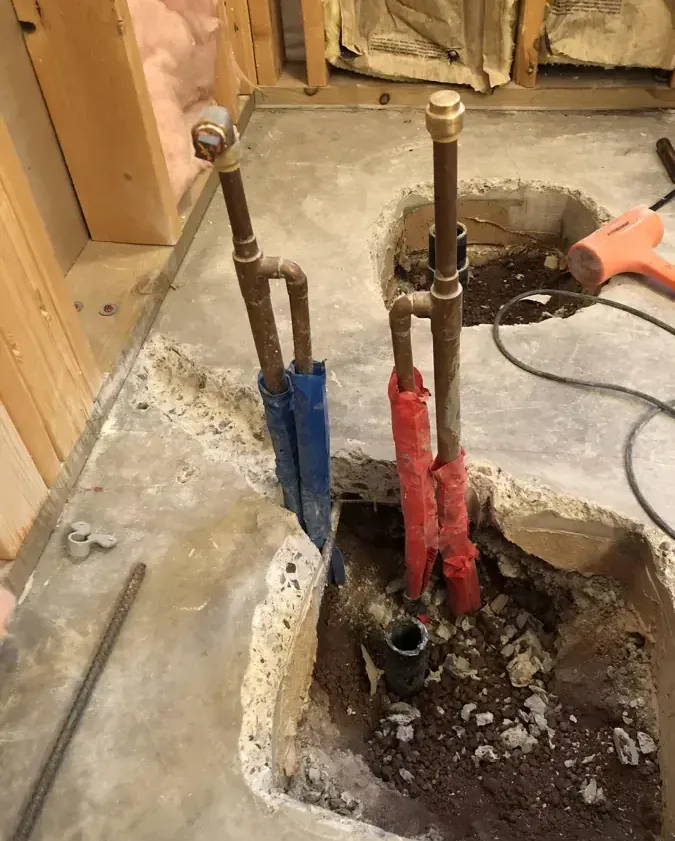
Floor-level water does not always begin beneath the slab. A plumbing professional distinguishes a pressurized pipe leak from rain entry, a nearby appliance or moisture moving from another room. Around Washington Street, Belgrade Avenue and Cummins Highway, the building assessment follows the actual wet path rather than assuming every home has the same foundation. The drying crew checks floor edges and adjoining rooms before deciding how much covering needs to lift.
How slab leak water damage proceeds
Locate the wet assembly
The initial walkthrough checks floor finishes, adjoining walls and any level below. The crew records the apparent source and flags areas that need the plumber’s diagnosis before opening concrete.
Separate repair from drying
The plumbing professional isolates the supply failure. Restoration work then targets the water left behind, with photographs of the exposed floor assembly and a clear boundary for each work area.
Control evaporation
Extraction removes accessible water before air movers and dehumidifiers manage the remaining moisture. The drying technician adjusts equipment to the exposed material, room conditions and safe power capacity.
Verify the substrate
Repeat measurements show whether the material approaches the drying goal. The contractor documents remaining flooring requirements and keeps replacement finishes separate from the decision to remove drying equipment.
Tracing slab moisture before opening the floor
A meter that moves when fixtures stop using water can support further leak investigation, but it does not locate the break. A plumber checks the supply and chooses suitable detection methods. The mitigation team maps the damage separately, because the wettest visible spot may lie away from the pipe. Flooring adhesives and underlayment can carry water laterally while the top surface still looks intact.
- The inspection compares damp and unaffected materials using the same meter settings and records the locations for repeat checks.
- Floor coverings receive an assessment for separation, swelling or trapped water before the crew decides whether removal improves access.
- Baseboards and lower wall cavities receive checks where the floor meets partitions, cabinets or a doorway into another room.
- Before a replacement covering returns, the owner should obtain the flooring professional’s substrate requirements and compare them with the restoration record. Different test methods can answer different questions about concrete and finish readiness.
Roslindale has varied residential buildings, including one- and two-family homes in its western area. That mix supports a property-specific approach, not a blanket claim about slabs. A finished concrete level needs a different access plan from a wood-framed floor above it. The scope identifies what the crew actually finds.
Drying concrete and the layers above it
After the supply repair stops new water, the extraction crew removes accessible liquid. The drying team then controls room humidity and directs airflow across suitable exposed surfaces. Dense concrete releases moisture slowly, so the assembly beneath a floor covering needs appropriate moisture testing before installation proceeds. A replacement floor may require additional tests specified by its manufacturer.
The crew records equipment settings, air conditions and repeat material readings. If the measurements plateau, the contractor checks for a remaining source, inaccessible underlayment or an air path that misses the wet area. Simply adding more fans does not solve a sealed wet layer. Selective removal can create access without treating the whole floor as equally damaged.
- Separate the pipe repair scope from extraction, material removal, drying and eventual floor replacement.
- Photograph lifted flooring and the exposed substrate before disposal changes the evidence of the loss.
- Keep a record of moisture trends at the slab edge and adjoining wall bases, not just the room center.
A damp floor can conceal water beyond the visible patch. Describe the affected rooms, any supply shutoff and the floor finish before the assessment starts.
(888) 480-6221Review the wet floor damageSafe access around an underfloor leak
A household should avoid wet outlets and equipment cords, keep children away from an opened floor and leave electrical isolation to a qualified professional when access is wet. The crew checks for concealed services before any opening. A warm patch alone does not authorize cutting into concrete. The plumber locates the supply problem, while the restoration contractor assesses the wet finishes. If water reaches an occupied room below, the assessment includes that ceiling. Active seepage needs source control before a drying enclosure can perform consistently. A stable walking surface also matters while floor coverings remain lifted.
For broader water preparedness, the Ready.gov flood precautions explain why standing water deserves caution. The EPA household leak checks describe ways to recognize wasted supply water. Neither replaces an on-site plumbing diagnosis.
Documentation for the slab loss
The claim file separates the discovered source, the resulting wet materials and the work needed to reach them. Date-stamped photographs, moisture maps and daily drying records help explain why a covering lifted or why equipment remained in place. The insurer assesses the policy and the cause; the restoration team does not decide coverage. A gradual leak can receive different treatment from a sudden break, and the pipe itself may fall under a different part of the repair budget.
What does slab leak water damage cost in Roslindale, MA?
Slab leak water damage cleanup commonly ranges from $1,500 to $7,500 for extraction and drying, depending on access and the affected floor area. Pipe repairs, extensive demolition and replacement finishes can add separate costs.
Limited floor area
$1,500 to $3,000
- Localized extraction
- Small drying enclosure
- Repeat moisture checks
Several wet layers
$3,000 to $5,500
- Floor covering access
- Wall-base assessment
- Extended equipment use
Broad hidden spread
$5,500 to $7,500+
- Multiple affected rooms
- Complex material access
- Detailed drying records
These ranges are estimates only. Water category, square footage, material class and the delay before drying affect the scope. The water damage cost calculator compares those variables before a property assessment.
What shapes the slab leak water damage plan
Source control first
A moisture map cannot repair a leaking supply. The plan identifies the professional responsible for stopping new water before drying progress can be assessed with useful repeat measurements.
Access matched to the floor
Tile, wood, resilient coverings and concrete behave differently. The crew checks the actual assembly before selecting an opening, so the scope describes the layer that holds moisture.
Comparisons that mean something
The technician compares like materials and notes the instrument used. Readings at an unaffected reference area help explain the goal without treating every percentage as interchangeable across substrates.
Records for the next trade
Drying notes follow the affected rooms and exposed edges. A flooring installer can then review the remaining substrate requirements rather than relying on the appearance of the surface.
Slab leak water damage coverage in Roslindale
The service area includes ZIP 02131, Roslindale Square, Adams Park, Washington Street, Belgrade Avenue, Cummins Highway, Canterbury Street and homes near the Arnold Arboretum. Crews assess each building's access and affected floors before placing equipment.
Coverage also includes Brookline, Hyde Park, Allston, Norwood and Holbrook.
Related water damage services in Roslindale
Water Extraction and Removal
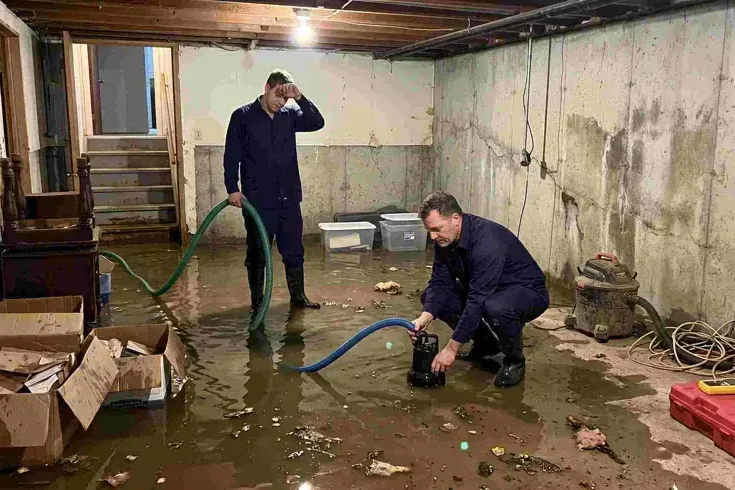
Pumps remove pooled water while extraction tools reach carpet, floor joints and low spots.
Service details ›
Structural Drying
Material readings determine equipment placement and the end of the drying phase.
Service details ›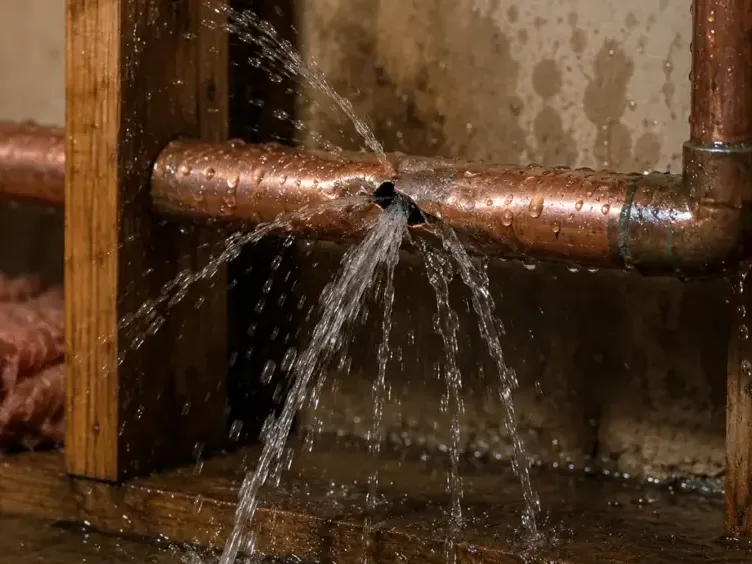
Burst Pipe Water Damage
A stopped supply leak still leaves wet wall cavities, insulation and floor layers to assess.
Service details ›Slab Leak Water Damage questions
Does a damp concrete floor prove there is a slab leak?
No. Water can arrive from an appliance, an exterior opening or a room beside the wet area. The plumber checks the supply system while the mitigation team traces the damage. A moving meter, sound or warm patch gives useful clues, but none alone identifies the exact opening needed in a concrete floor.
Who repairs the pipe under the floor?
A plumbing professional diagnoses and repairs or reroutes the damaged supply. The restoration contractor handles extraction and the wet building materials. Keeping those scopes separate helps the household understand which cost addresses the source and which addresses its consequences. Floor replacement follows only after the repair and the relevant drying checks support that next step.
Can wood flooring remain over damp concrete?
The crew assesses the water source, the condition of the boards and the moisture trapped underneath. A covering that prevents access or has lost its bond may need removal. The contractor should explain the reason before work begins. A surface that feels dry is not enough evidence to seal moisture beneath a replacement floor.
How long does the slab need drying equipment?
Dense materials often take longer than exposed drywall. The drying technician follows readings at repeat locations and checks room humidity rather than setting a fixed removal date. Remaining seepage, impermeable finishes and limited access can extend the work. A floor manufacturer may also require a different moisture test before installation, even after restoration drying ends.
What should happen if the wet patch keeps returning?
The contractor checks whether the original source has stopped and whether another route feeds the floor. The plumber may need to revisit the supply investigation. The drying team also checks adjacent cavities and covered edges. Restarting equipment without understanding the new water can hide the real reason the area fails to make measurable progress.
Does insurance pay for access to the pipe?
That depends on the policy, the cause and the way access relates to the covered damage. The household should ask its insurer about pipe work, access and resulting damage separately. The restoration file can show the affected materials and necessary drying work, but the crew cannot promise payment or decide how a policy applies.
Is this service available outside daytime hours?
Emergency dispatch operates 24/7 for active water damage. The first discussion should identify whether the supply still runs, which floor is wet and whether electricity or an opened floor creates a hazard. Access and conditions determine the response plan. No arrival interval is promised, and unsafe rooms should stay clear while help is arranged.
Roslindale slab water needs a measured plan
The restoration team traces wet layers, extracts accessible water and documents concrete drying while the plumbing repair addresses the source.
(888) 480-6221Arrange underfloor damage help