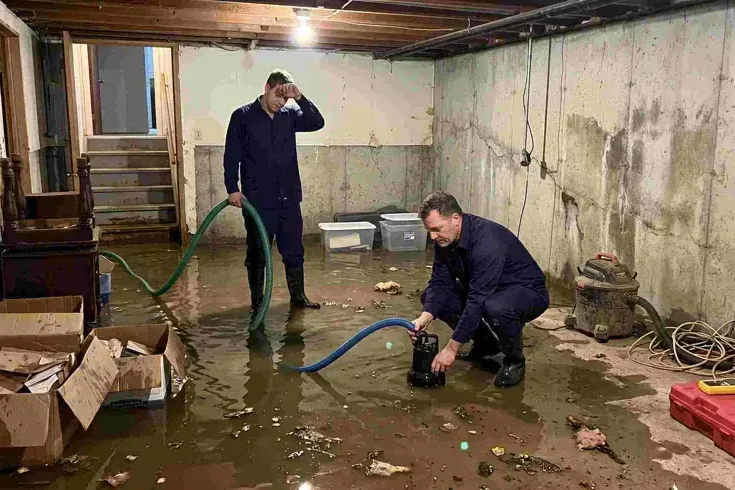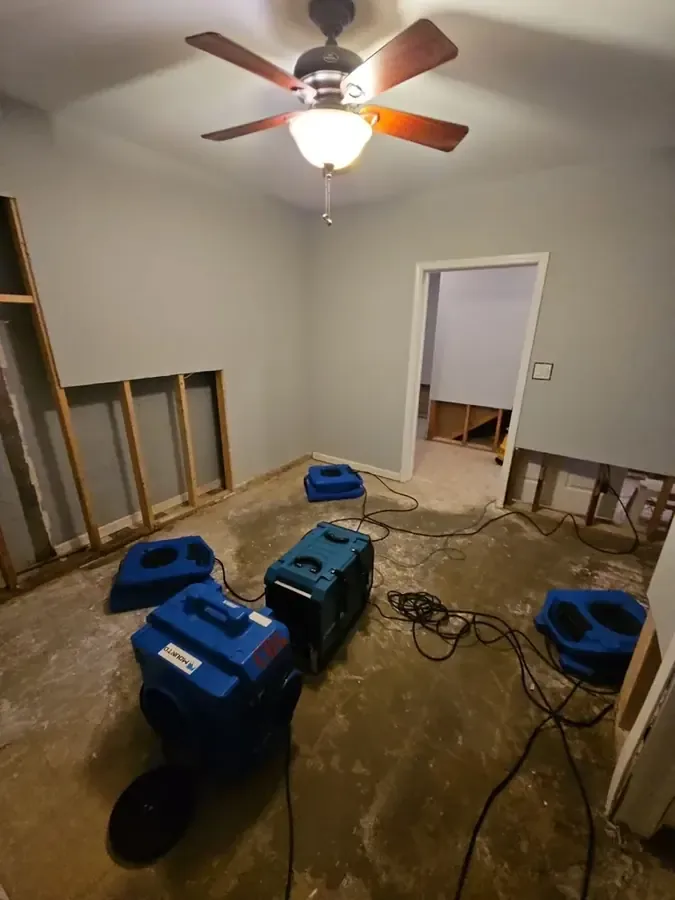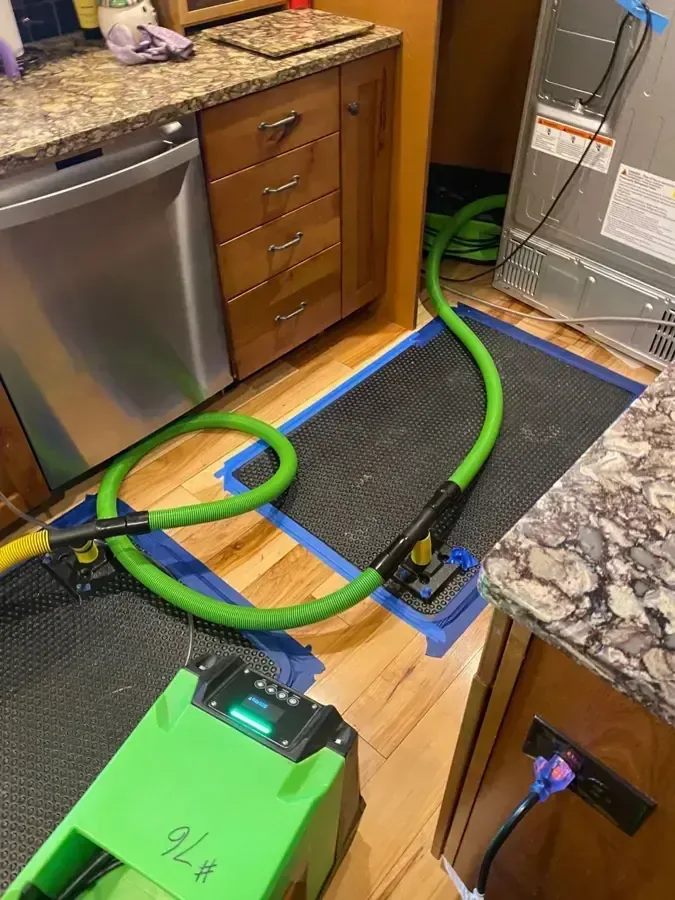
Water beside a kitchen appliance needs an inspection of the machine, its connections and the nearby floor. Holbrook has also had documented public water discoloration reports, including one updated in November 2024 after transmission system work. A household dealing with an indoor puddle needs a room assessment that identifies the escaped water and affected materials, alongside any separate question about water arriving at the tap.
Key takeaways
- Stop using the leaking appliance and arrange safe source assessment.
- Describe the puddle location separately from any water supply concern.
- Inspect floor edges behind accessible cabinet bases and beside fixed equipment.
- Record what was found when an appliance or finish is moved.
- Complete material drying checks before reinstalling coverings or closing access.
Begin with the puddle and the appliance's recent use
The person reporting the problem should describe where water appeared and what the appliance was doing before it was noticed. A leak observed during operation may give the repair professional a useful starting point, while a puddle found after a household absence needs its own careful source investigation.
Operation should stop while the leak is assessed. A resident should avoid reaching wet electrical parts or pulling a heavy fixed appliance out without appropriate help, and should tell the repair contact about the visible water and available access before anyone attempts to examine connections behind the machine.
Appliance leak cleanup follows the escaped water through the room. The appliance repair professional addresses the source, while the cleanup assessment identifies affected flooring, cabinet bases and nearby belongings, so the property contact has a clear description of both the repair and the material work.
- Name the appliance and the location of the visible water.
- Record whether the machine was operating when the leak appeared.
- Keep hands away from wet electrical components.
- Arrange appropriate help before moving fixed or heavy equipment.
Keep tap water questions separate from escaped water
The local report updated in November 2024 described muddy water in household fixtures after public water system work. A resident with a supply question should describe the tap condition and any relevant notice received, while the puddle in the kitchen still needs inspection to identify the actual point of escape.
A later public startup notice described blending from the new treatment plant beginning July 6, 2026 and listed temporary pressure changes and minor discoloration during that transition. Those notices belong with the water supply information a household may have, while the appliance assessment records the observed connection or component problem.
A photograph of discolored water at a fixture and a photograph of a wet floor answer different questions. Keeping their descriptions distinct helps the appropriate contacts evaluate them, and prevents an appliance repair appointment from overlooking the water already trapped around the cabinet base or beneath the nearby covering.
Cabinet bases can hide the edge of the affected floor
The visible puddle may end at a cabinet while the floor continues beneath it. The crew should inspect accessible edges and note where fixed panels prevent a view, then explain whether a removable panel or another access point is needed to evaluate the material concealed behind the cabinet face.
A cabinet component should be assessed according to its actual material and condition. Swelling, separating finishes or a wet concealed edge deserve documentation, with photographs taken before access work and after the hidden area is exposed so the repair decision can be traced to what was found.
The household should ask which components are proposed for retention and which need replacement. A retained panel or trim piece should stay identified by its position, allowing the later kitchen repair work to use the right part and understand why it was removed during the moisture investigation.
- Mark the fixed cabinets beside the leak.
- Photograph swollen or separated material before removal.
- Keep reusable panels identified by their original position.
- Record any floor edge that remains inaccessible.
Thresholds show where the inspection should continue
Water near the appliance can reach the transition into an adjoining room, especially when the floor covering changes at a doorway. The inspection should check that boundary and compare the visible condition on each side, with the result recorded even when the adjacent room appears unaffected at first glance.
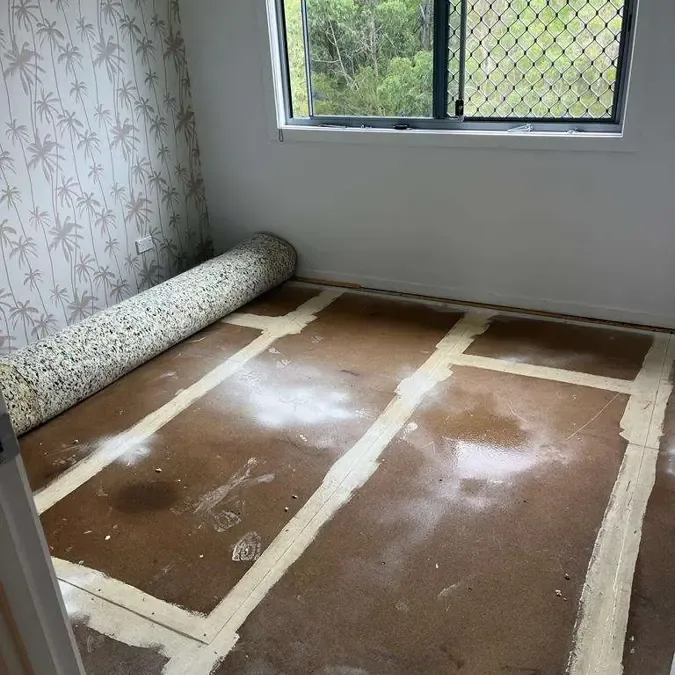
Floor layers should be described individually when access reveals them. The condition of a surface covering does not explain the material beneath it, and a decision about retention needs to consider whether the underlying assembly can be assessed and dried with the covering left in place over that section.
Removal of pooled water can make the remaining inspection clearer. Once accessible liquid is extracted, the crew should identify the material still holding moisture and any additional area needing inspection, rather than ending the scope at the outline of the puddle photographed when the appliance stopped.
An appliance movement needs a coordinated appointment
The cleanup crew may need access behind a machine while a repair professional is responsible for disconnecting or assessing it. The property contact should coordinate those tasks so the floor and wall behind the appliance can be examined when access becomes available, before the machine returns to its operating position.
The newly exposed area should be photographed and described, including the floor covering, wall base and observed source location. If the assessment reveals more wet material than expected, the work plan should be updated at that point, with the reason for the changed scope explained to the person authorizing it.
Returning the appliance too early can conceal an area still needing work. The handoff between trades should state whether the surrounding assembly is ready for reinstallation, whether a connection repair has been completed and whether an opening or retained material still requires attention before normal kitchen use resumes.
- Arrange repair and inspection access together.
- Document the surface hidden behind the machine.
- Confirm the source work before normal operation restarts.
- Keep the reinstallation decision connected to the material assessment.
A commuter household needs clear access instructions
Holbrook became largely residential after its postwar housing boom, and most residents commute to work in Greater Boston. For a household away during the working day, the cleanup appointment should include a practical agreement about entry, the rooms needed and who receives an update if the scope changes.
The building drying plan should explain which equipment must remain operating and which area stays clear. A resident returning home needs enough information to use unaffected space safely without moving a machine or replacing a panel that the crew still needs to reach for monitoring.
Updates should describe the specific material checked and any remaining access need. A message saying that the cabinet base still needs inspection is more useful for planning the next visit than an unexplained extension of the job, particularly when the household must arrange another repair professional's access at the same time.
Kitchen repairs should follow the recorded material condition
The closing assessment should connect the repaired appliance or connection with the surrounding cleanup work. The homeowner should receive the source findings, the areas treated and the condition of retained materials, together with a clear list of cabinet, wall or floor repairs still needed after mitigation has finished.
Finish replacement may involve more than the patch directly beside the appliance. The repair contractor needs the photographs and location notes showing any wet transition or concealed cabinet edge, allowing the proposed work to match the assessed area rather than relying only on the surface mark that remains visible.
The household can keep the appliance service record, drying observations and final room photographs together for future maintenance. That file should preserve the exact location of the problem and the work completed, giving a later technician useful information if the same area needs inspection or an unrelated kitchen improvement exposes it again.
Questions
Does discolored tap water identify the cause of an appliance puddle?
The puddle needs inspection of the appliance and its connections. A supply concern should be described separately to the relevant water contact, while the room assessment follows the liquid that escaped onto the floor.
Should a resident pull out a wet appliance immediately?
A heavy or fixed machine can involve electrical and plumbing connections that require appropriate handling. The repair and cleanup contacts should coordinate safe access so the hidden surfaces can be examined when the appliance is moved.
Can the cabinet stay if its visible face looks normal?
Retention depends on the condition of the actual assembly, including accessible concealed edges. The crew should explain what was inspected and how any wet material behind the face will be addressed before making that decision.
What should be checked before the appliance goes back?
The responsible trades should confirm the source work and the readiness of surrounding materials. Any remaining drying access, floor repair or cabinet opening should be resolved or clearly included in the reinstallation plan.