Appliance Leak Water Damage Holbrook, MA
A dishwasher or washer can release water where the floor is hardest to see. Appliance leak recovery opens a safe inspection route behind the machine and follows moisture beneath cabinets, finishes and adjoining room edges.
(888) 480-6221Inspect the concealed appliance spill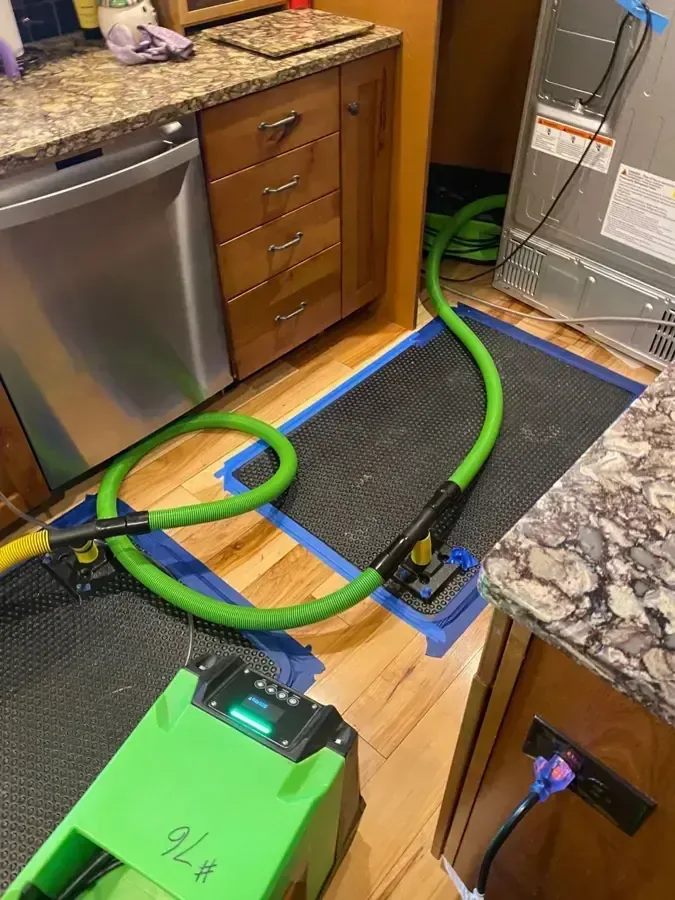
A leak can stay beneath an appliance until a floor seam changes or a cabinet base begins to swell. In Holbrook, recovery starts by identifying the machine's discharge path and arranging safe access around its connections. The repair professional addresses the failed appliance or fitting, while restoration checks the surfaces hidden behind and beneath it. Wiping the exposed floor leaves those concealed layers unevaluated.
How appliance leak water damage proceeds
Review the escaped water
Record the appliance, operating circumstances and observed spread. Establish safe access with the service professional and identify whether continued use is adding water to the same concealed floor or cabinet area.
Expose the hidden boundary
Inspect beneath and behind the safely accessed machine. Measure cabinet bases, wall edges and floor transitions to locate retained water that may be absent from the open surface of the room.
Recover affected materials
Extract accessible liquid and assess damaged components for retention or removal. Set up drying around the actual wet layers, with cleaning appropriate to the water released during the appliance event.
Coordinate the final fit
Check moisture conditions in the machine bay and adjoining assembly before reinstallation. Document replacement needs and keep appliance service, cabinet repair and floor finishing aligned with the completed drying findings.
Connect the spill with the operating cycle
Notes about which machine was running and when water first appeared help focus source service. A supply connection and used wash water have different exposure histories, so the cleanup plan accounts for what actually escaped. The assessment also records whether the leak recurred after a cycle or remained present while the machine was idle.
- Keep the appliance out of use when operation causes additional water to collect around the cabinet or floor edge.
- Photograph swelling, lifted seams and stains before moving items that may conceal the original water boundary.
- Describe the machine's enclosure and nearby connections so its movement can be planned by the appropriate service professional.
Most residents commute to Greater Boston, and the Holbrook/Randolph Rail Station provides rail access to South Station. A leak found after an absence needs a clear account of the last observed dry condition. That history supports the inspection, while direct moisture checks establish the actual wet boundary beneath the appliance and adjoining fitted furniture.
Look beneath a dry looking cabinet face
Cabinet bottoms, toe kick spaces and floor seams can hold water after the open room appears dry. Some components swell or separate and need evaluation for replacement. Others can remain if access allows effective drying. A controlled opening or safe appliance movement may be necessary to inspect the assembly without forcing equipment through connected hoses or damaged floor coverings.
The floor beneath a fitted machine deserves special attention before it is reinstalled. Moisture can move through layers toward an adjacent room or wall. Water extraction removes accessible liquid, while material checks determine the subsequent drying approach. The scope should identify what was reached directly and any location that remains concealed until the machine service is completed.
- Compare cabinet bases with neighboring components to identify swelling or separation beyond the visible puddle.
- Inspect wall edges behind the appliance where moisture can be absorbed into a concealed partition.
- Keep reinstallation coordinated with the drying endpoint so equipment does not cover a still wet floor layer.
Describe the machine and the first wet cabinet or floor edge. An assessment can organize safe access and identify the concealed material recovery needed after appliance service.
(888) 480-6221Review the appliance water pathProtect electrical and plumbing connections
A heavy machine should not be pulled across a wet floor without assessing its electrical and water connections. Occupants should avoid touching plugs or powered controls while standing in water. The appropriate qualified trade can isolate and move equipment safely, then address the failed component. Do not run another cycle simply to demonstrate the leak while water is spreading into the interior. Describe the operating history instead, keep the affected area clear and allow access planning to account for hoses, cords and the condition of the floor underneath.
After safe access is established, the water source and material contact determine cleaning needs. Appliance discharge containing residues should not be treated as identical to an untouched supply spill across a clean surface.
Make the cabinet and floor handoff clear
Routes 37 and 139 meet at the town center, while North Shore Road is another named corridor. Within any affected property, the useful location details are the machine bay, cabinet edge and floor transition. The completion record should identify those areas, retained materials and any replacement needs. Source service, drying and reinstallation can then proceed in an order that preserves access until the concealed assembly is ready.
For general household precautions, see Ready.gov flood safety and the EPA household leak checks.
What does appliance leak water damage cost in Holbrook, MA?
Appliance leak restoration in Holbrook depends on cabinet damage, floor layers and access behind the machine. These estimates describe interior recovery; appliance service, replacement components and new finishes require their own scope items.
Accessible floor spill
$700 to $1,500
- Open surface extraction
- Small wet boundary
- Limited material checks
Cabinets and floor layers
$1,500 to $3,200
- Toe kick access
- Layered floor assessment
- Directed drying arrangement
Spread to adjoining spaces
$3,200 to $5,000+
- Connected room mapping
- Additional finish removal
- Expanded cabinet inspection
These ranges are estimates only. Water category, square footage, material class and the delay before drying affect the scope. The water damage cost calculator compares those variables before a property assessment.
What shapes the appliance leak water damage plan
An operating history
The assessment considers the appliance cycle, last dry observation and continued leakage. Those details help coordinate source service while moisture checks establish the affected floor and cabinet boundary inside the room.
Protected machine access
Equipment movement is planned around water connections, electrical components and floor condition. This creates an inspection route without pulling a heavy appliance across damaged finishes or exposing occupants to wet powered equipment.
Cabinet layer attention
Lower cabinet components and enclosed toe kick spaces receive direct assessment where possible. Their condition can differ from the visible cabinet face, affecting whether retention, access or replacement is the appropriate choice.
Reinstallation after verification
The machine bay and adjoining finishes remain available for drying checks until suitable conditions are established. The record explains what has been retained and any remaining replacement work before the appliance returns.
Appliance leak water damage coverage in Holbrook
Appliance damage inspections cover Holbrook homes in 02343, including properties around Lake Holbrook and Routes 37 and 139. Describe the machine, its last use and any wet cabinetry or adjoining floor.
The same service nearby: appliance leak water damage in Roslindale, Hyde Park, Norwood.
Related water damage services in Holbrook
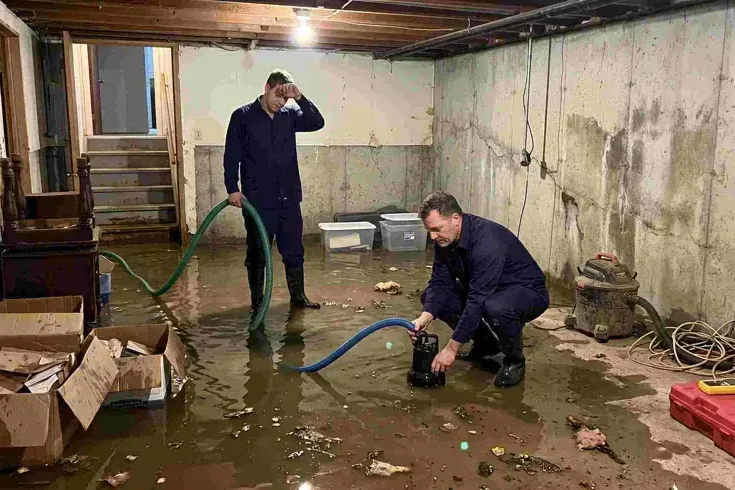
Water Extraction and Removal
Pumps remove pooled water while extraction tools reach carpet, floor joints and low spots.
Service details ›
Structural Drying
Material readings determine equipment placement and the end of the drying phase.
Service details ›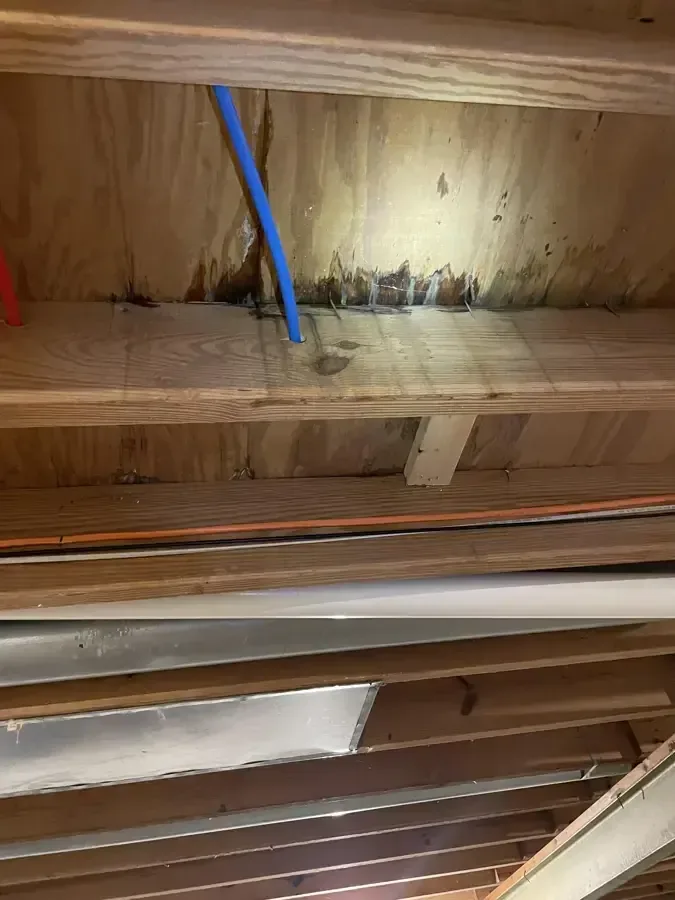
Ceiling Leak Water Damage
Overhead saturation calls for safe access and checks above the damaged finish.
Service details ›Appliance Leak Water Damage questions
Should the appliance run again to locate the leak?
Running another cycle can add water to concealed floor and cabinet materials. The responsible service professional should determine the diagnostic approach after access and safety are assessed. Notes about the previous cycle, visible discharge and first wet location provide useful information without intentionally repeating the event inside an already affected room.
Can a cabinet face look normal while its base is wet?
Yes. Moisture may collect within the toe kick or beneath the cabinet bottom, away from the finished front. Those spaces need assessment when the water path reaches them. Comparing accessible components and opening a suitable inspection route helps identify retained moisture and material changes that are not visible from the room.
Who disconnects and moves the machine?
The appropriate service or repair trade should address equipment isolation and movement around electrical and plumbing connections. Restoration work can then inspect the exposed surfaces and begin material recovery. Coordinating those tasks avoids covering a wet machine bay prematurely or damaging connections while trying to reach an otherwise inaccessible puddle.
Is dishwasher discharge treated like supply water?
The water's actual use and material contact affect the cleanup approach. Discharge may contain residues that require different cleaning and porous material decisions from a fresh supply escape. The assessment should record the source and affected layers so cleaning, removal and drying are selected for the exposure that occurred.
Why check the room on the other side of a wall?
Water can move through floor layers or enter a partition at its base. If the observed path reaches that boundary, adjoining surfaces deserve measurement. This helps establish whether the loss remains within the appliance area or extends into another room that needs access and monitoring during the drying process.
Will the appliance repair include cabinet replacement?
Equipment service and interior material repairs are separate scope items unless the written arrangement states otherwise. The restoration assessment documents affected cabinets and floors, while the responsible trade handles the failed machine or fitting. Clear descriptions help owners compare costs and coordinate each task without leaving an important repair unassigned.
What must happen before the machine is put back?
Source service should be complete, and the concealed floor and neighboring materials should meet the appropriate drying conditions. Any removal or replacement needs must also be addressed. The final record should identify the inspected machine bay and access limitations so reinstallation does not hide an unresolved wet layer behind the equipment.
Recover the space beneath the machine
Arrange moisture checks and drying decisions for the cabinet bases, floor layers and neighboring finishes affected by the leak.
(888) 480-6221Plan concealed appliance area drying