Ceiling Leak Water Damage Holbrook, MA
An overhead stain calls for inspection of the assembly above it. Ceiling recovery identifies the source, protects the room beneath weakened finishes and follows moisture through joists, insulation and nearby wall connections.
(888) 480-6221Assess the wet ceiling assembly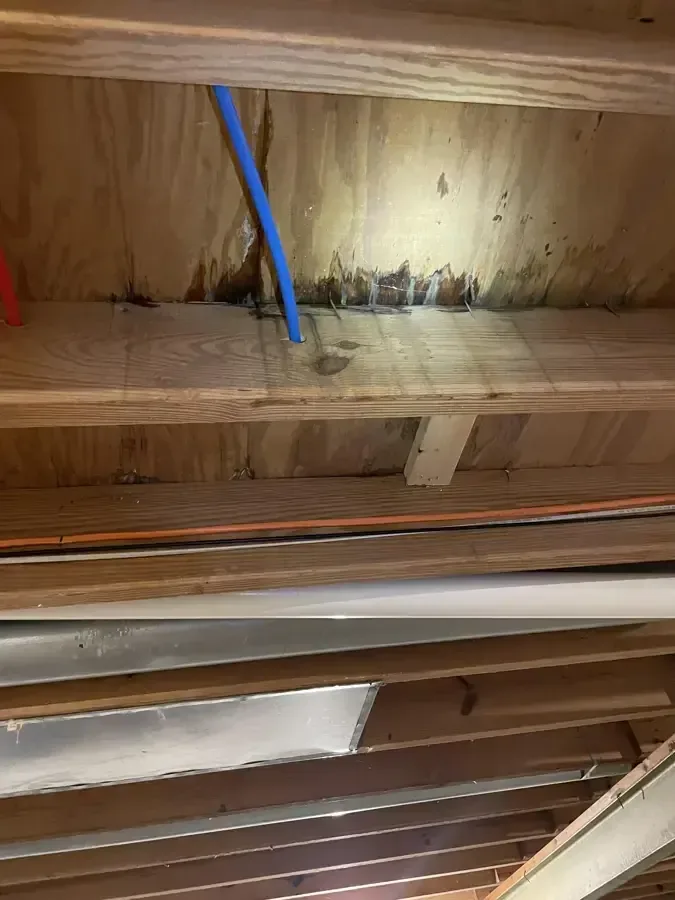
A ceiling can collect water before it releases a drip. Discoloration, soft material or a changed shape therefore deserves attention even when the floor remains dry. In Holbrook, ceiling restoration begins by protecting the room below and identifying what lies above the mark. A supply pipe, appliance or roof opening leads to a different repair task, while the resulting wet joists and finishes need their own recovery assessment.
How ceiling leak water damage proceeds
Assess the overhead condition
Inspect the room from a safe position and identify active dripping, sagging and electrical exposure. Inspect the area above the ceiling to organize source investigation and plan controlled access below.
Expose affected components
Remove unsuitable finish material as required and record the layers revealed. Inspect joists, insulation and cavity boundaries to define the retained assembly that needs cleaning, drying or additional access.
Dry the connected cavity
Arrange airflow and humidity control around the actual wet components. Track source repair progress and measure neighboring sections so a hidden pocket does not remain outside the monitored work area.
Release for finish work
Document appropriate moisture conditions in retained materials and identify any outstanding limitations. Keep the ceiling repair sequence aligned with those findings before insulation, wallboard and decorative surfaces close the cavity.
Read the room above the stain
The position of the visible mark is a starting point. Water may cross a joist bay or follow a pipe penetration before reaching the finish. Reviewing the use of the room above and any connection with recent rain helps organize the investigation. Moisture checks then establish which neighboring sections need closer access rather than relying on the stain outline alone.
- Record the first observed drip, any spreading discoloration and whether a fixture was operating upstairs at the time.
- Describe ceiling height, furniture below the mark and access from the upper room or attic before inspection begins.
- Keep the area beneath a sagging surface clear so its condition can be assessed without exposing occupants to falling material.
John F. Kennedy Elementary School and Holbrook Middle-High School share the school complex that opened in 2017. Buildings have different room uses and access constraints, whether a residential property or another occupied interior. At the affected address, scheduling should account for the people below the work area and the ability to isolate the room during overhead access.
Open enough to understand the cavity
Controlled access can reveal wet insulation, joists and the underside of the floor above. The opening should be based on material condition and inspection needs. Loose or weakened ceiling finishes may need removal, while retained structural components can be assessed for drying. Photographing the exposed cavity preserves the water path before cleanup and repair change its appearance.
Air movement across the visible room does not necessarily reach an enclosed ceiling bay. The drying setup must account for the actual cavity and the layers retaining water. Where an upstairs pipe is responsible, burst pipe recovery connects source repair with the larger material assessment. Access remains available until measurements show the retained assembly is ready for the next stage.
- Check wall tops and corners when water has followed the ceiling edge into a vertical cavity.
- Assess insulation separately from framing because it may obstruct drying access or retain substantial moisture.
- Keep electrical fixtures within the affected area under the appropriate qualified trade's assessment before ordinary use resumes.
Report the stain, any sagging and the room above it. An assessment can establish safe overhead access and trace the wet assembly before ceiling repairs are planned.
(888) 480-6221Discuss the overhead damageDo not test a wet ceiling from below
Pressing, puncturing or pulling at a bulging ceiling can release water and weakened material unexpectedly. People and pets should remain outside the area beneath it. Water around a light fitting or other electrical component requires qualified assessment; occupants should avoid touching the fixture or nearby wet controls. Heavy furniture should be moved only along a safe route after overhead hazards are considered. A photograph taken from outside the affected zone can describe the change without placing anyone beneath a surface whose remaining strength has not been assessed.
The source investigation and safe opening plan should proceed together. Repairing a fixture upstairs is important, but it does not remove retained water or restore the strength of an already damaged ceiling finish.
Make the closing decision measurable
North Shore Road is one of the town's named corridors. Wherever the building sits, the completion record should identify the room, ceiling sections and retained materials actually measured. This provides a precise handoff to the finish trade. Any remaining wet area or inaccessible pocket should be addressed before insulation and wallboard return, so a clean new ceiling does not conceal an incomplete drying task.
For general household precautions, see Ready.gov flood safety and the EPA household leak checks.
What does ceiling leak water damage cost in Holbrook, MA?
Ceiling restoration in Holbrook is priced by the affected assembly, access and spread into adjacent rooms. The planning ranges below describe interior recovery; source repairs and installation of replacement ceiling finishes require separate scope descriptions.
Localized ceiling wetting
$900 to $1,800
- Focused overhead inspection
- Limited material opening
- Small drying zone
Joists and adjacent walls
$1,800 to $3,500
- Connected cavity access
- Insulation condition inspection
- Broader moisture checks
Multiple rooms or levels
$3,500 to $5,500+
- Several wet assemblies
- Complex overhead access
- Expanded monitoring plan
These ranges are estimates only. Water category, square footage, material class and the delay before drying affect the scope. The water damage cost calculator compares those variables before a property assessment.
What shapes the ceiling leak water damage plan
Protect the room below
Overhead work needs a defined area that accounts for occupants, furniture and access routes. The first assessment identifies weakened finish material and electrical concerns before anyone works beneath the affected ceiling.
Investigate connected bays
Measurements extend beyond the stain where the assembly offers a path for water. This helps locate wet insulation and framing to define the affected interior area beyond the visible mark.
Coordinate the upper source
The appropriate repair trade addresses the fixture, pipe or roof problem above. Restoration planning tracks that work so the exposed ceiling cavity stays protected from additional water while retained materials are drying.
Preserve cavity evidence
Photographs and readings from the open ceiling explain material decisions and completion conditions. They also document hidden areas before replacement finishes conceal the repair and make those surfaces unavailable for routine inspection.
Ceiling leak water damage coverage in Holbrook
Ceiling damage assessments cover Holbrook properties around Routes 37 and 139, North Shore Road and elsewhere in 02343. Mention sagging, active dripping and whether the room above contains plumbing or roof access.
The same service nearby: ceiling leak water damage in Roslindale, Hyde Park, Norwood.
Related water damage services in Holbrook
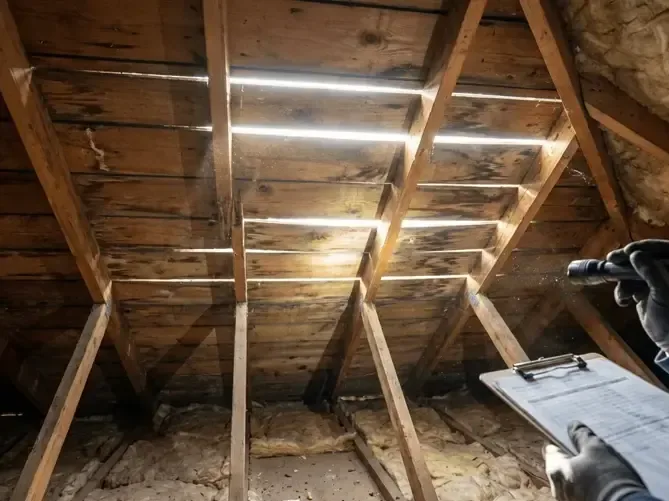
Roof Leak Water Damage
Attic inspection follows the rain path beyond the visible ceiling stain.
Service details ›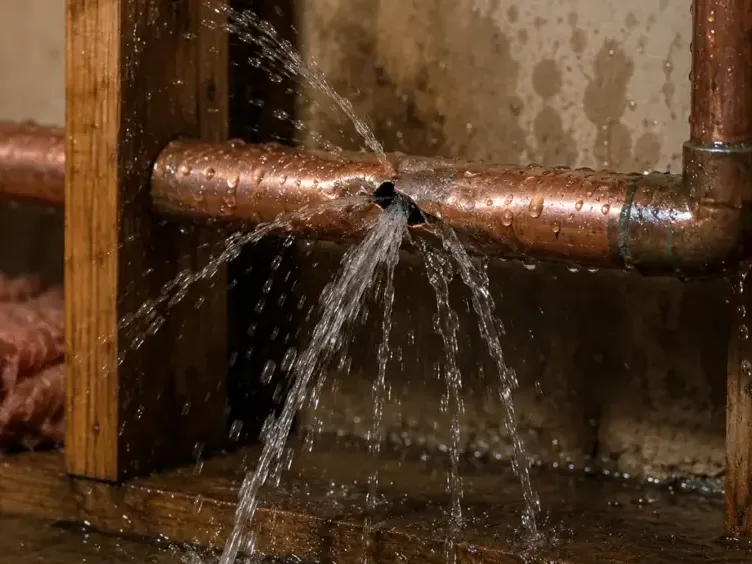
Burst Pipe Water Damage
A stopped supply leak still leaves wet wall cavities, insulation and floor layers to assess.
Service details ›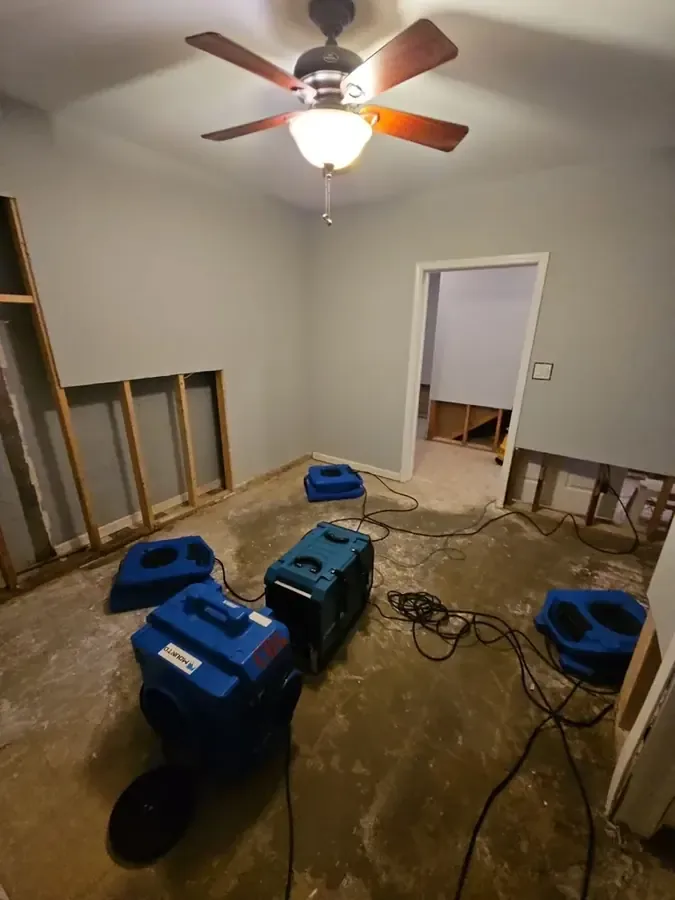
Structural Drying
Material readings determine equipment placement and the end of the drying phase.
Service details ›Ceiling Leak Water Damage questions
Should a bulge be punctured to release the water?
A wet ceiling can release water and loose material unpredictably when disturbed. The area beneath it should remain clear until an appropriate assessment and controlled opening plan are in place. A photograph from a safe position and a description of the room above provide useful information without testing the weakened finish directly.
Why inspect beyond the brown mark?
Moisture can travel along framing or behind finishes before discoloration becomes visible. The mark therefore provides a clue rather than the complete boundary. Measuring adjacent sections helps identify damp insulation and other wet components, allowing the scope to address the assembly that actually received water instead of only the visible stain.
Can a ceiling be dried through the room alone?
Room airflow may not reach a closed cavity effectively. The material arrangement, insulation and available access determine the drying method. Controlled openings may be needed to inspect or expose retained wet components. The plan should explain how moisture will be reached and how progress will be measured before the opening is closed.
Does an upstairs bathroom always identify the cause?
An upstairs bathroom gives the investigation useful fixture and pipe locations, but the actual source still needs assessment. Water can travel through connected spaces and appear away from the failure. The responsible repair trade investigates the cause while restoration measurements map the materials exposed below and around the observed ceiling damage.
What happens to lights in the affected area?
Electrical fixtures and associated components exposed to water require assessment by a qualified professional. Occupants should avoid touching wet fittings or attempting to operate them to test their condition. The ceiling access plan should account for those components so material removal, drying and eventual finish repair proceed with appropriate electrical coordination.
When can furniture return beneath the repair?
Furniture placement depends on the overhead condition, equipment routes and remaining work. The room should stay clear where weakened finishes, open cavities or tools create hazards. Once the appropriate personnel establish safe access, dry belongings can be placed where they will not block monitoring or interfere with the remaining ceiling repair sequence.
What should the final ceiling record include?
It should identify the source repair status, materials removed, retained components measured and any access limitations. Photographs of the exposed cavity are useful before enclosure. The record also distinguishes completed drying from replacement finishes, so the owner and subsequent trade understand what remains necessary to return the room to normal use.
Recover the cavity above the room
Arrange inspection and drying of affected ceiling materials with a clear handoff to the source and finish repairs.
(888) 480-6221Plan the ceiling cavity assessment