Appliance Leak Water Damage Allston, MA
An appliance can leave water beneath cabinetry long before a spill reaches the open floor. Restoration begins with the machine's source problem, then checks the finished surfaces and concealed layers surrounding its installed position.
(888) 480-6221Assess the appliance water path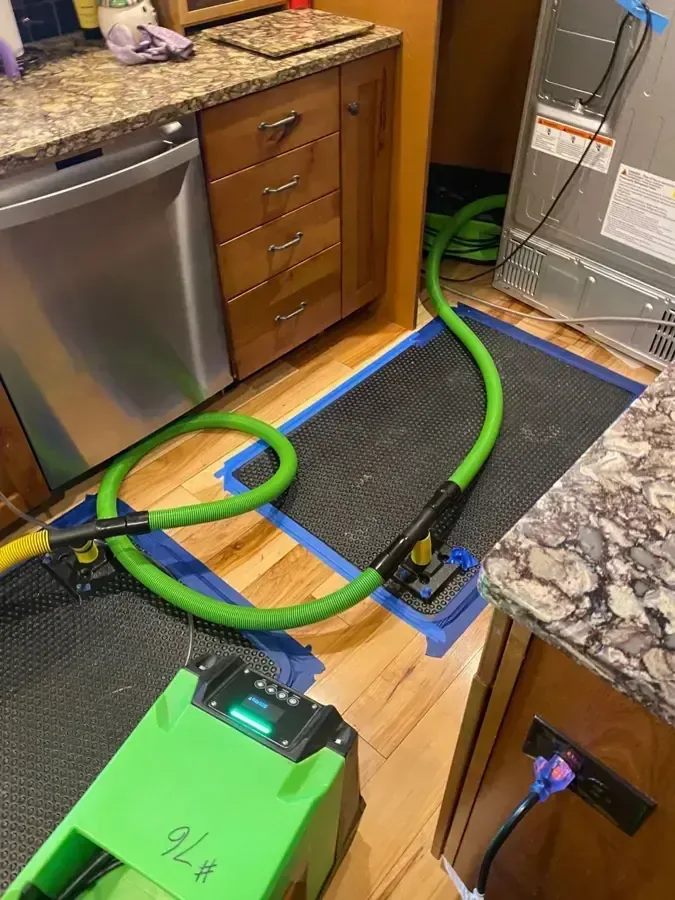
A dishwasher puddle that disappears under the cabinet toe space deserves attention beyond the kitchen floor. Laundry and refrigerator leaks can create similar concealed routes. In Allston, appliance water damage cleanup follows the actual machine connection and surrounding assembly, establishing whether the release involved supply water, used water or another equipment fault before deciding how contacted materials should be handled.
How appliance leak water damage proceeds
Record the machine and visible spread
The first assessment uses the appliance history and visible damage to establish inspection priorities. Source repair is coordinated while the affected floor, cabinetry and accessible adjoining spaces receive moisture checks.
Create access around fixed components
Authorized disconnection or panel removal exposes areas that cannot be evaluated from the open room. Newly visible wet layers are recorded and included in the material handling and drying scope.
Remove damaged layers and dry retained surfaces
The plan addresses material condition and the water source before equipment is placed. Measurements follow the exposed cabinet base, floor assembly and any connected room affected by the appliance release.
Assess readiness for reinstallation
The final assessment records retained material condition and source status. The owner can then coordinate replacement panels, floor finishes and appliance installation with a clear account of any outstanding restoration needs.
Use the machine's operating history to focus the inspection
The property contact can describe whether water appeared during filling, draining or while the appliance sat unused. Those observations help the appropriate repair professional investigate the source. The restoration inspection then maps the affected floor and nearby cabinets. A machine that has been switched off can still leave trapped moisture below its installed position and adjoining finishes.
- Report the appliance involved and the first edge where water appeared, without moving a connected machine independently.
- Identify swelling at cabinet bases, loose flooring or staining in the room below.
- Check whether water reached a transition into another room or collected behind a fixed cabinet panel.
The Brighton Avenue area toward Brighton includes wooden triple-deckers, while Commonwealth Avenue and adjoining streets have brick apartment buildings. An appliance leak in either setting may affect a shared floor or nearby occupied space. Access coordination matters when the inspection needs the ceiling below or a neighboring unit to establish the full wet boundary.
Cabinets can conceal the most persistent moisture
A dry countertop says little about the condition at the cabinet base. Water can enter seams and soak backing or floor layers beneath a built-in unit. Selective access may be needed to expose those surfaces, especially when an appliance must remain disconnected during repair. The removal plan should protect retained components while allowing the affected assembly to be examined.
- Evaluate cabinet material condition before assuming every swollen panel will recover through drying.
- Inspect underlayment and the subfloor separately when the finish prevents access to trapped water.
- Document the area behind removed panels or equipment before installation work closes the space again.
Harvard Avenue is a neighborhood restaurant corridor. In a business setting there, equipment-related water damage may require a work boundary around food preparation or storage activity. The inspection should follow the actual release and contents exposure, with repair and cleanup responsibilities made clear before the appliance returns to service.
Describe the appliance, the timing of the leak and any cabinet or floor changes nearby. An assessment can trace the concealed water path before the equipment is reinstalled.
(888) 480-6221Discuss the appliance spillConnected equipment needs careful handling
Occupants should not pull a heavy appliance across a wet floor or reach behind it to touch a wet plug. The machine and its connections may require qualified isolation before cleanup access is safe. Stop using an appliance that releases more water, and keep people away from wet electrical components. Used water should receive an appropriate contamination assessment before fans are placed nearby. In shared properties, the responsible building contact should arrange permission for disconnection, cabinet access and inspection of any room below the affected appliance.
Reinstall only after the concealed area is reviewed
Equipment repair and building-material drying should meet at a deliberate handoff. The assessment identifies the source correction, retained wet layers and measurements supporting the drying endpoint. Cabinet panels, appliances and replacement flooring should not close off access prematurely. A clear record gives the owner an understandable sequence for restoring both the equipment and the room around it.
For general household precautions, see Ready.gov flood safety and the EPA household leak checks.
What does appliance leak water damage cost in Allston, MA?
Appliance leak restoration in Allston depends on cabinet access and the number of wet floor layers. These estimates cover cleanup and drying complexity; machine repair, disconnection and replacement finishes should be distinguished in the scope.
Accessible floor spill
$700 to $1,500
- Limited open water
- Simple floor access
- Focused moisture assessment
Cabinets and floor layers
$1,500 to $3,200
- Concealed cabinet wetting
- Layered floor access
- More drying equipment
Spread to adjoining spaces
$3,200 to $5,000+
- Connected room damage
- Broader assembly inspection
- More repair coordination
These ranges are estimates only. Water category, square footage, material class and the delay before drying affect the scope. The water damage cost calculator compares those variables before a property assessment.
What shapes the appliance leak water damage plan
Source details shape the scope
Information about the appliance cycle and connection helps distinguish the release being investigated. The resulting cleanup plan considers both the water source and the materials contacted around the installed machine.
Built-in spaces receive inspection
Toe spaces, side panels and floor transitions are examined for concealed moisture. Access proposals explain which component needs temporary removal and how that opening helps evaluate the wet assembly behind it.
Adjacent rooms remain part of the picture
Water reaching a shared floor or partition can affect space beyond the kitchen or laundry area. The property contact coordinates any additional entry needed to inspect those connected occupied rooms.
Equipment return follows a clear handoff
The repair status and drying observations are reviewed before panels or machines close the work area. Remaining material replacement and installation needs are identified separately for the owner or manager.
Appliance leak water damage coverage in Allston
Properties near Brighton Avenue, Commonwealth Avenue and Harvard Avenue can arrange an appliance damage assessment. Include the machine involved, whether it was running and any wet surfaces visible in adjoining rooms or below.
The same service nearby: appliance leak water damage in Roslindale, Brookline, Hyde Park.
Related water damage services in Allston
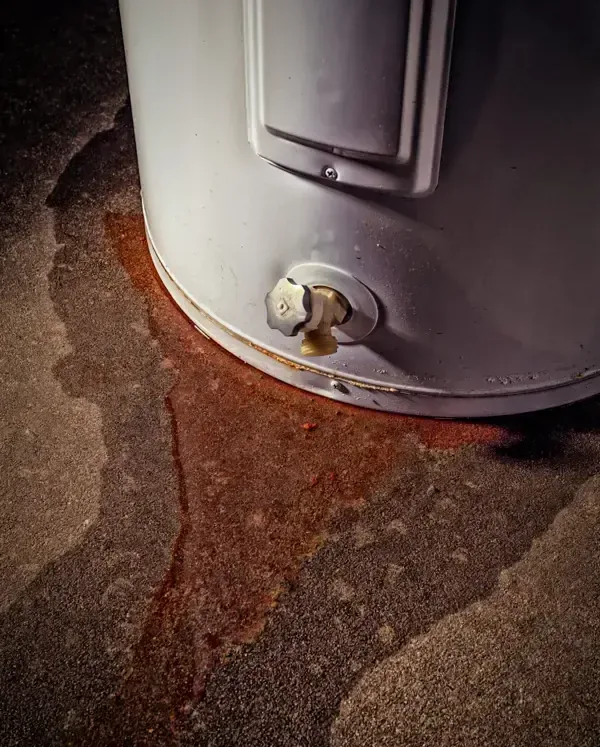
Water Heater Leak Cleanup
Tank water can hide under nearby flooring after the heater supply stops.
Service details ›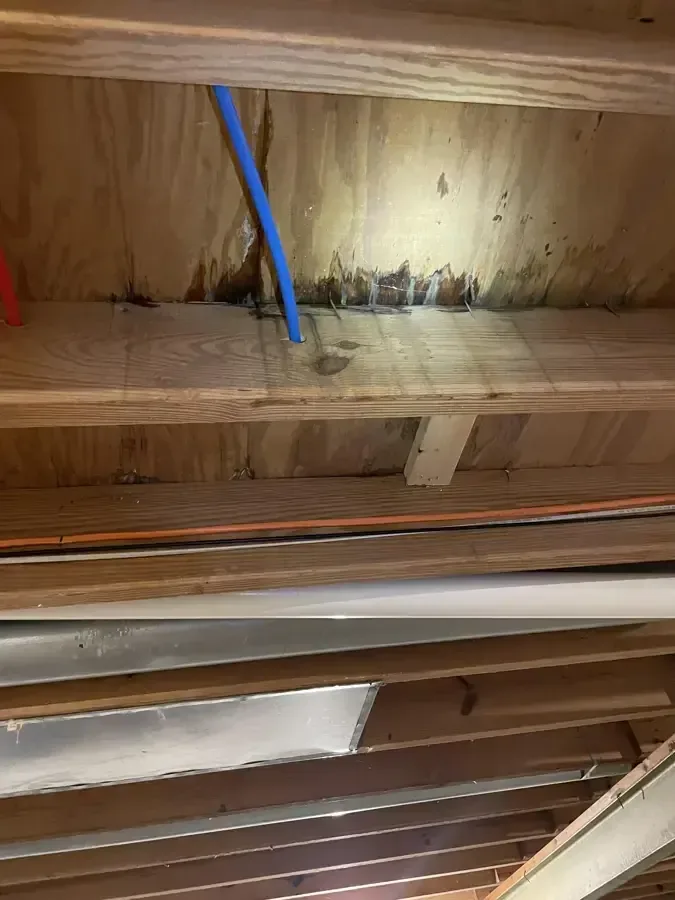
Ceiling Leak Water Damage
Overhead saturation calls for safe access and checks above the damaged finish.
Service details ›
Structural Drying
Material readings determine equipment placement and the end of the drying phase.
Service details ›Appliance Leak Water Damage questions
What should be reported about the appliance cycle?
The property contact should describe whether water appeared during filling, washing, draining or while the machine was idle. The first visible location and any recent source repair are also useful. These observations help the equipment professional investigate while restoration assesses the separate path through cabinets, flooring and nearby building materials.
Can an appliance be restarted after the puddle is wiped?
The source problem should be evaluated before the machine is used again. A qualified equipment inspection should confirm the repair, and the area beneath the machine still needs moisture checks. Repair findings and the restoration assessment should inform when normal operation and room use can resume after the leak.
Why is the cabinet toe space part of the inspection?
A low cabinet opening can admit water that remains hidden from the center of the room. Backing, bases and floor layers may absorb moisture inside that space. Inspecting it helps determine whether access, removal or drying is needed before a panel is replaced and the affected surfaces become difficult to reach.
Does a leak always require replacing the cabinets?
The material, condition and water exposure determine the decision. Some components may be retained after appropriate assessment and drying, while damaged porous sections need removal. The scope should explain which parts are affected and why, avoiding an assumption that either all cabinetry or none of it needs attention.
Can water beneath a dishwasher affect the ceiling downstairs?
Water can move through openings and floor layers into the assembly below. The inspection should consider that route when observations or readings indicate spread. In a shared property, management may need to coordinate access to the lower room so the source area and resulting ceiling damage receive a connected assessment.
How does used appliance water change the cleanup?
The water source and contacted materials influence cleaning and removal decisions. Residues carried during a cycle may require a different approach from an isolated supply release. The inspection should establish those conditions before ordinary drying equipment is installed or affected porous materials are returned to use inside the room.
What should happen before the machine slides back into place?
The source repair should be complete and the exposed building materials reviewed for remaining moisture. The restoration record should identify the retained surfaces, drying observations and any needed replacement work. This handoff helps prevent an installed appliance or new cabinet panel from blocking access to an area still requiring attention.
Reach moisture beneath the installed machine
Coordinated access gives the affected floor and cabinet materials attention before repaired equipment closes off the work area.
(888) 480-6221Arrange appliance damage inspection