Ceiling Leak Water Damage in Brookline, MA
A ceiling stain can connect to plumbing, a wet floor or rain entry above. Brookline ceiling leak cleanup begins with safe overhead assessment and access to the space supplying the water.
(888) 480-6221Assess the wet ceiling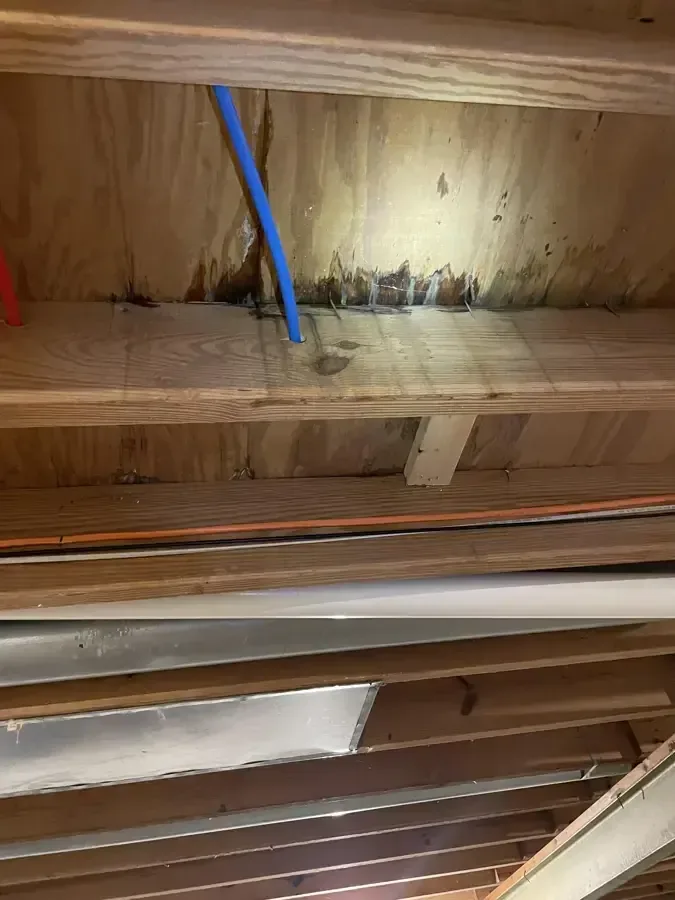
A growing patch overhead raises two immediate questions: whether the ceiling is safe and where the water is coming from. Ceiling leak restoration in Brookline needs to answer both before decorative repairs begin. Water can collect above a finish, move along joists or follow a pipe opening into the room below. The inspection therefore needs more than a view of the stain from floor level.
How ceiling leak water damage proceeds
Assess the room from safety
Assess the visible ceiling shape, dripping and nearby fixtures without entering an unstable area. Arrange source side access and protect the room before any controlled overhead opening is made.
Connect upper and lower findings
Inspect the area above together with the wet cavity below. Trace moisture along joists and wall corners, recording the materials reached rather than treating the stain as the entire boundary.
Prepare retained overhead materials
Remove unsuitable finishes and address wet insulation as needed. Coordinate source repair with a drying arrangement that reaches the exposed assembly and preserves safe access beneath the work area.
Verify before finish replacement
Assess readings and the condition of retained components before closing the ceiling. Record remaining source or repair issues so new finishes do not hide a cavity that still needs attention.
Arrange access above the visible damage
Large brick apartment buildings developed along the streetcar routes. In a connected building, the room above a wet ceiling may belong to another occupant, making management coordination part of the cleanup. At a Coolidge Corner apartment, source side access can be necessary to inspect a fixture or wet floor that is feeding the overhead cavity. The stain below helps locate the problem but cannot show the whole assembly.
- Identify who can provide access to the room above and whether its plumbing or flooring is still wet.
- Record dripping locations and changes in the ceiling shape from a safe position outside the affected area.
- Check the adjacent wall corners where water can descend after traveling across the overhead space.
Coolidge Corner lies at Beacon Street and Harvard Street. For a property in that district or in Longwood, the useful building details are the floor involved, the available entrance and any restrictions on opening a shared assembly. Those arrangements should be clear before removal begins so a wet cavity does not remain inaccessible while the visible room is being repaired.
Evaluate strength as well as moisture
Ceiling finishes can soften, separate or bow after wetting. The decision to retain a section depends on its condition as well as the water source. An opening may be needed to assess framing, insulation and the underside of the floor above. Selective removal should protect the room below and preserve photographs of the layers exposed by the work.
Once the cause is addressed, drying can target suitable retained materials. Moisture readings should include joists and nearby wall areas along the route, with attention to pockets that remain concealed. Burst pipe cleanup may be part of the same scope when a supply failure upstairs caused the ceiling loss.
- Document weakened finishes separately from sound surfaces opened only to gain inspection access.
- Inspect ceiling edges and adjoining partitions rather than stopping at the darkest part of a stain.
- Keep the source repair findings available while the drying team evaluates the cavity beneath it.
Describe the ceiling shape, active dripping and the room above. Access details help establish a safe inspection of the visible damage and the concealed materials supplying it.
(888) 480-6221Discuss the ceiling access planKeep people away from a bulging ceiling
Do not stand beneath a sagging or bulging ceiling, even if the drip has slowed. Trapped water and weakened finish can fall unexpectedly. Avoid puncturing the surface, pulling at loose sections or touching wet ceiling fixtures. Electrical hazards require professional assessment, and furniture should be moved only when it can be reached without entering the unstable area. Keep children and animals out of the room. A controlled opening should be planned by appropriate professionals with protection for the space below and access to the source above.
Make the repair handoff specific to the assembly
Before a new ceiling is installed, the record should show what caused the leak, which wet layers were removed and how retained materials were checked. The underside of a repaired upstairs floor may still need inspection from below. Repainting belongs after those material decisions. A clear handoff helps keep the final finish from concealing damp insulation, an unresolved source or a wall corner that never received attention.
For general household precautions, see Ready.gov flood safety and the EPA household leak checks.
What does ceiling leak water damage cost in Brookline, MA?
Ceiling leak cleanup in Brookline depends on overhead access, finish stability and wet material beyond the stain. These estimates describe restoration scopes; upstairs plumbing repairs and replacement decorative work should be identified separately in the written estimate.
Localized ceiling wetting
$900 to $1,800
- Limited finish opening
- Accessible cavity checks
- Focused overhead drying
Joists and adjacent walls
$1,800 to $3,500
- Connected framing moisture
- Wall corner access
- Additional material removal
Multiple rooms or levels
$3,500 to $5,500+
- Several ceiling areas
- Shared access coordination
- Broader drying scope
These ranges are estimates only. Water category, square footage, material class and the delay before drying affect the scope. The water damage cost calculator compares those variables before a property assessment.
What shapes the ceiling leak water damage plan
Overhead safety comes first
A change in ceiling shape requires attention before anyone works beneath it. Assessment should identify instability and electrical concerns while keeping occupants outside the area where wet material could fall.
Source side access secured
The room above may need a separate key holder or building manager. Coordinating that entry allows the inspection to connect the overhead damage with the fixture or floor feeding it.
Cavity condition recorded
Photographs and readings should capture joists, insulation and finish layers exposed during opening. The record explains why some materials are retained while others require removal before the ceiling can be restored.
Closure follows material checks
A patched source does not settle the condition of the ceiling assembly. Retained components need evaluation and a clear repair handoff before the replacement finish closes the inspection route from below.
Ceiling leak water damage coverage in Brookline
Ceiling inspections can include Coolidge Corner, Longwood and homes near Harvard Street. Mention the affected room, visible sagging and access to the floor above so the visit can address both sides of the overhead assembly.
The same service nearby: ceiling leak water damage in Roslindale, Allston, Hyde Park.
Related water damage services in Brookline
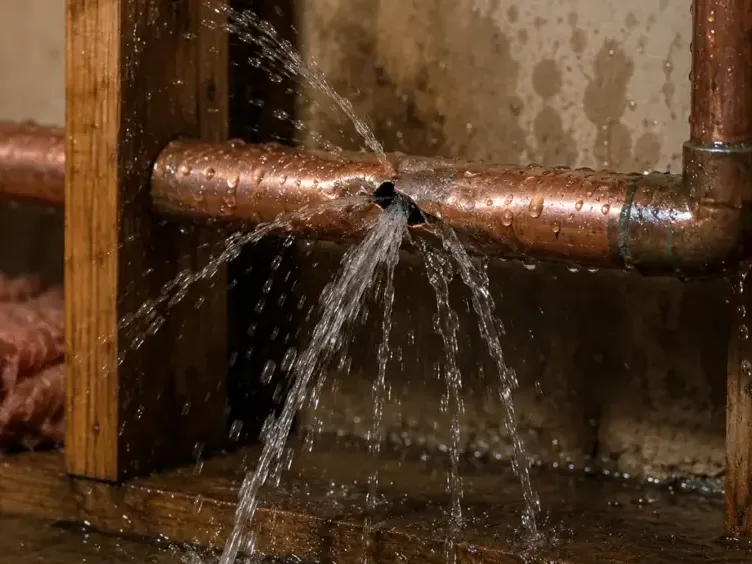
Burst Pipe Water Damage
A stopped supply leak still leaves wet wall cavities, insulation and floor layers to assess.
Service details ›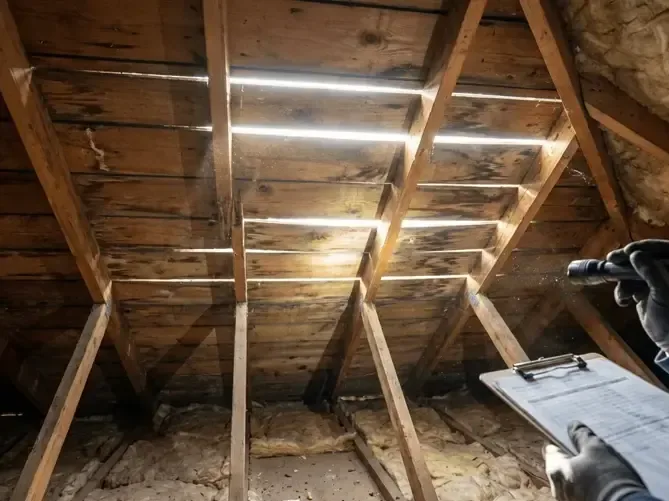
Roof Leak Water Damage
Attic inspection follows the rain path beyond the visible ceiling stain.
Service details ›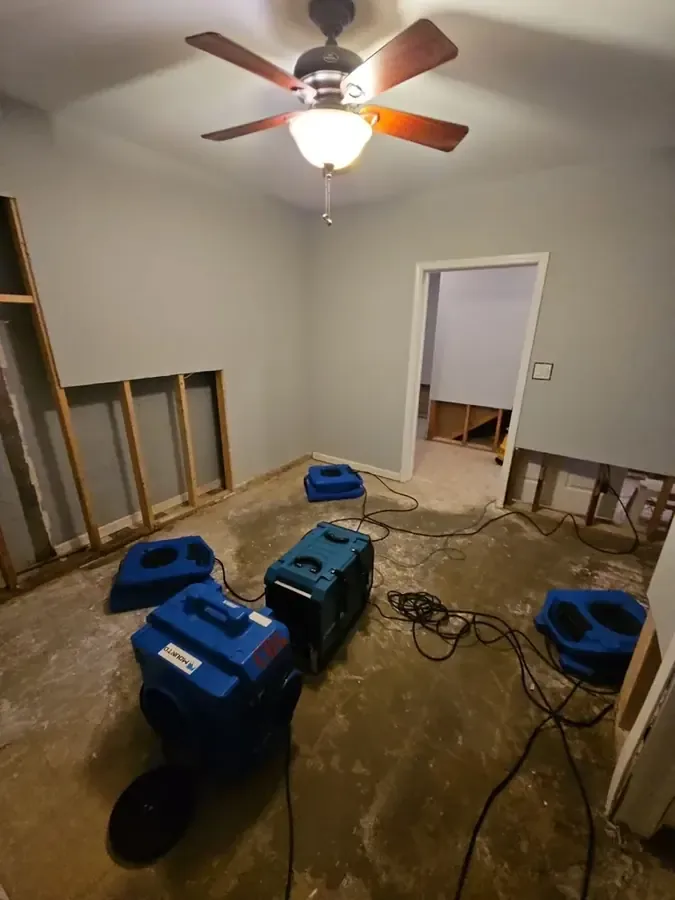
Structural Drying
Material readings determine equipment placement and the end of the drying phase.
Service details ›Ceiling Leak Water Damage questions
Can the source be found from the stain alone?
The stain shows where water reached the finish, but water can travel before appearing there. Access to the room or cavity above often provides the missing connection. The inspection should compare both sides of the assembly and follow nearby framing and pipe openings rather than assuming the source sits directly over the darkest patch.
What does a bulging ceiling require?
Keep the space below clear and arrange professional assessment. A bulge can hold water or mark a weakened finish that may fall. Do not puncture the surface or pull at loose material. Any opening needs controlled handling, attention to electrical fixtures and protection of the room beneath the affected overhead assembly.
Why might a neighboring unit need inspection?
In a shared building, water can originate above or travel through connected components before reaching another unit. Access coordination helps trace that route and identify remaining wet layers. Building management should arrange entry where necessary so repairs in the visible room do not proceed while the source or an adjoining wet cavity remains unassessed.
Is replacing the ceiling enough after an upstairs leak?
Replacement addresses the damaged finish, but source repair and retained material drying are separate requirements. Joists, insulation and the floor assembly above may still hold water. Those layers should be assessed before the new ceiling closes access, with a record of removal decisions and measurements supporting the repair handoff.
Can a ceiling be dried without opening it?
That depends on its condition, the source and the ability to inspect concealed layers. A sound surface may still hide wet insulation or trapped water. The restoration proposal should explain how the assembly will be evaluated and why any chosen drying method can reach retained materials rather than relying only on the painted face.
What should the building manager know before work starts?
Provide the affected floor, rooms showing damage and any ongoing use of fixtures above. Mention entry restrictions and who controls access to neighboring units. Equipment routes and protection of shared areas should be arranged before overhead removal begins, especially when the work requires coordination between occupants above and below the same cavity.
When can the room be redecorated?
Decorating should follow source correction, removal of unstable finishes and evaluation of retained overhead materials. Readings and visible condition should support closing the assembly before painting begins. Any renewed stain or increase in moisture needs investigation, because a cosmetic coating cannot resolve continued entry or a damp layer hidden above the ceiling.
Resolve the overhead water path
A sound ceiling repair begins with source control and evaluation of retained joists, insulation and wall edges before a new finish is installed.
(888) 480-6221Plan the overhead damage assessment